St Albans · serving Hertfordshire, Bedfordshire & Buckinghamshire
0800 048 7633
info@soselectrical.net

An up to date consumer unit is a major part of ensuring your installation has a high level of protection.
Why would I need to upgrade my fuse box?
As with most material things, fuse boxes deteriorate with age, and as updates in safety standards and new technology are implemented to improve electrical safety. Another reason you may need to upgrade is because of planned expansion works that will need to meet the current requirements of the wiring regulations BS7671.
Now more commonly known as a consumer unit, your fuse box should be relatively easy to find and accessible in your home, as this is where electricity is distributed to all the final circuits within your property. If you don’t know where your consumer unit is located, you should make it a priority to find out, just in case you ever need to switch the electricity off in an emergency.
A consumer unit can be made up of all or some of these fundamental parts:
If your fusebox has a wooden back, cast iron switches, or a mixture of fuses, it is likely that it dates back to before the 1960s and will need to be replaced. We will only carry out a consumer unit upgrade following a recent EICR, to ensure it is possible to proceed and to avoid the situation of finding a fault during installation that prevents the upgrade being completed.
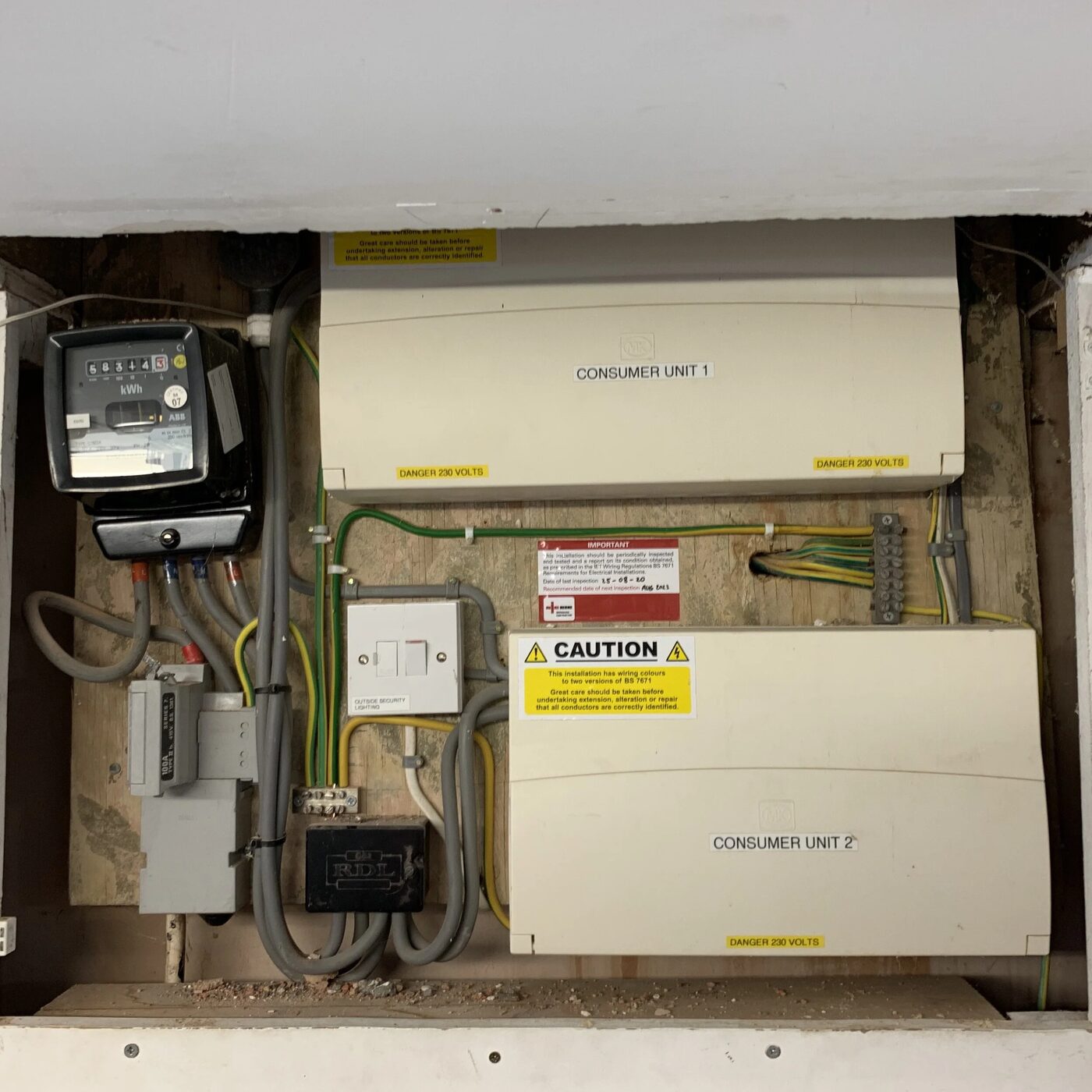
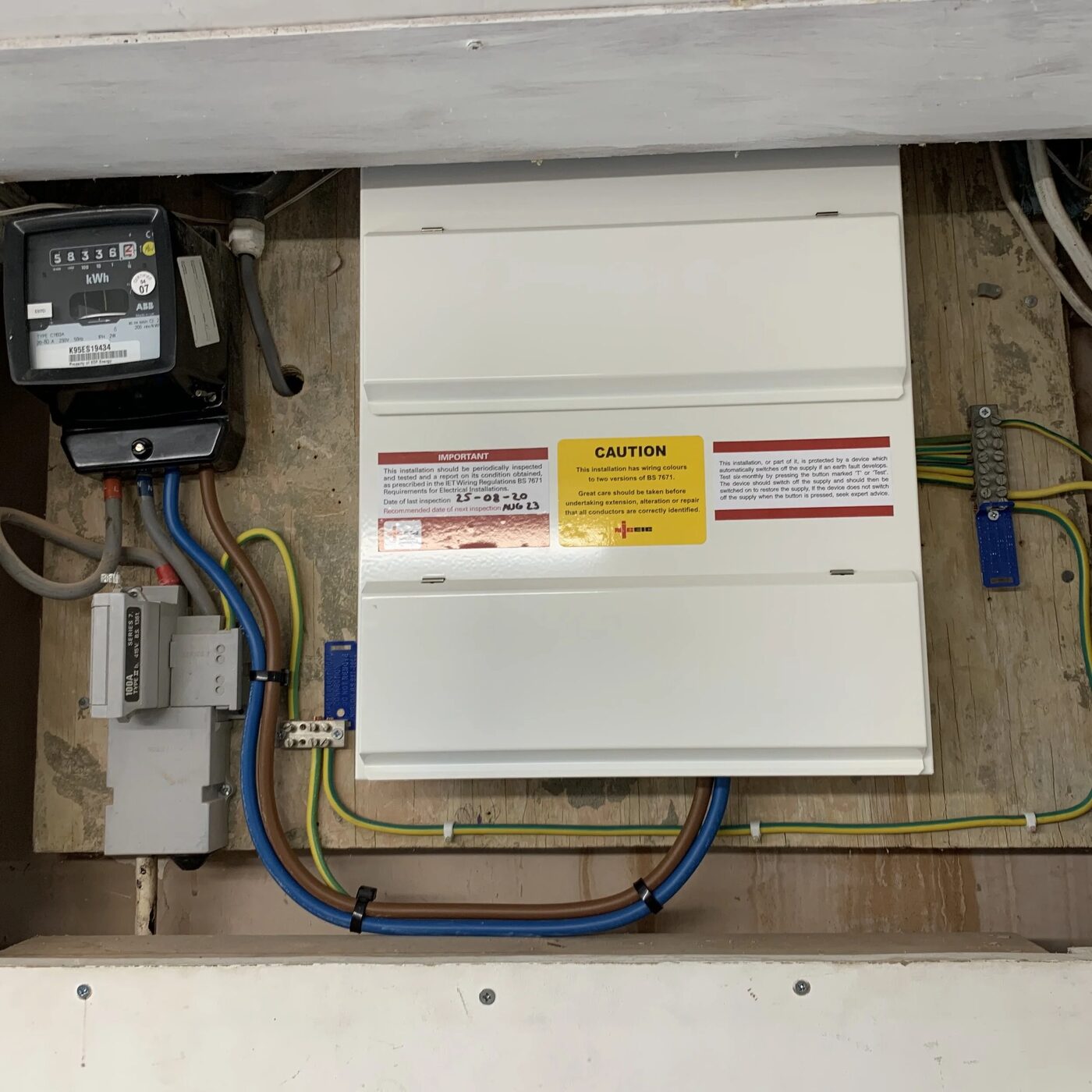
An RCD is a sensitive safety device that switches off electricity automatically if there is a fault. It is designed to protect against the risks of electrocution and fire caused by earth faults, and can help protect you from electric shock in potentially dangerous areas like bathrooms and gardens.
An RCD constantly monitors the electric current flowing through one or more circuits it is used to protect. If it detects electricity flowing down an unintended path, such as through a person who has touched a live part, the RCD will switch the circuit off very quickly, significantly reducing the risk of death or serious injury.
The electrical industry has found that fixed RCDs (within a consumer unit) are about 97% reliable. This improves if they are tested regularly. Remember — although RCD protection reduces the risk of death or injury from electric shock, it does not reduce the need to be careful. You should test all fixed and socket RCDs about every six months by pressing the test button on the device. If you hold the test button in and the RCD does not switch off the electricity supply, get advice from a registered electrician.
Since July 2008, virtually all circuits in new or rewired homes have been required to include an RCD under the latest edition of BS 7671. To check if you have fixed RCD protection, go to your consumer unit and look for a device with a push button marked ‘T’ or ‘Test’.
All our upgrades are certified and Part P notified on completion. Contact us for a quotation today.